

Every city-to-suburbs move has a moment when reality lands. Maybe it is walking the new backyard in Montclair. Maybe it is realizing how far the closest bagel shop actually is. Or the opposite: standing in your new Jersey City apartment, hearing the PATH train rumble below, thinking about how much space you just traded for how much energy. A New Jersey transition is a real lifestyle change, and a smooth long-distance or local move helps the shift land softer.
Know What You Are Really Choosing
Before you commit, spend a weekend or two living in the target neighborhood and not visiting. Living. Grab coffee at 8 a.m. Ride the PATH or NJ Transit at rush hour. Walk the block. Neighborhoods you loved on a Saturday afternoon can feel very different at 7 a.m. on a Tuesday.
If you are moving out of Manhattan or Brooklyn to a Hudson County or Bergen County suburb, the commute is the make-or-break factor. Jersey City, Hoboken, and Harrison are a fifth borough by transit; a Maplewood or Summit commute is longer and costlier. A PATH train from Jersey City to Manhattan runs 8 to 20 minutes; from Summit, the same trip is closer to 45 minutes each way on NJ Transit.
Pro Tip: Get a real number on your monthly commute cost before you sign a lease. Train, subway, parking, and the occasional Uber can add $400 to $600 more than you expect.
Rightsize Your Furniture Before Moving Day
Moving between the city and suburbs is one of the few moves where your belongings often do not fit the new home. A Manhattan studio’s furniture looks sparse in a Montclair colonial. A Summit family’s dining set will not fit through the door of a Jersey City walkup. Measure your new place before you decide what to move.
Sell, donate, or store the pieces that will not work. Facebook Marketplace, Chairish, and area consignment shops handle resale-ready furniture. For pieces you want to keep but cannot fit, Molloy’s packing and unpacking services inventory and label everything cleanly for storage or later re-integration.
Do not forget the small stuff. Rugs cut for a city apartment do not scale to suburban living rooms. Curtains for standard NYC windows look wrong on suburban picture windows.
Manage the Move-In Logistics
Moving into a New Jersey suburb is usually simpler than moving in a city. There is a driveway, no Certificate of Insurance (COI), and no elevator to reserve. The catch: trucks still need clear access. If your new street is narrow or has a tight cul-de-sac, tell your crew. A mature tree or low-hanging wire can force a smaller shuttle vehicle on the last stretch.
Coming back the other direction, into Jersey City, Harrison, or Hoboken, tightens up. High-rise moves require the COI, elevator reservation, and sometimes a damage deposit. Confirm moving hours with your building manager the same week you sign the lease.
Set Up Utilities and Address Changes Early
New Jersey utilities work differently from NYC. In an NYC apartment, most were bundled through the building. In a suburb, you probably have separate accounts with PSE&G for gas and electric, a local water company, and a cable or fiber provider (Verizon Fios covers much of Hudson and Bergen counties). Set up each account two to three weeks before your move.
If you are moving into New Jersey from out of state or NYC, you have a limited window to update your driver’s license and register your vehicle. The NJ MVC change-of-address page walks through the requirements.
Pro Tip: Update your car insurance the day you close on the new place. Rates in New Jersey can shift significantly by ZIP code, sometimes in your favor if you are leaving Manhattan. It is one of the more painless wins of a suburban move.
Reset Your Routine on the Other Side
The first two weeks in a new home are when the lifestyle change actually happens. Find the coffee spot within walking distance. Try a new restaurant each weekend. Walk the Van Vorst neighborhood in Jersey City or the streets of Montclair. If you are moving with kids, register them at the new school and set up one activity as an anchor: a sport, a music lesson, an after-school program.
For a city move (from suburb to Jersey City, Hoboken, or into New York), the reset is about learning transit rhythms, the closest laundromat, and the grocery delivery schedule. Ask neighbors what they wish they had known.
A Move That Handles the Whole Transition
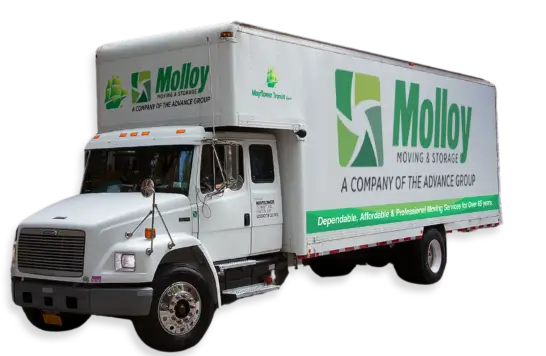
The best transitions between city and suburbs happen with a crew that knows both worlds. Molloy Moving has been serving New York and New Jersey since 1946, and our teams have handled every combination: Manhattan to Maplewood, Harrison to the Upper East Side, Long Island to Jersey City. Wherever you are headed, contact us for a free moving estimate.